
We independently score every service with our Experience Index. We may earn a commission if you subscribe through links on this page — it never affects our scores or picks.
If you want the deeper card-by-card breakdown — every card and its full credit stack in one place — that lives in our companion inventory, cards that pay for your subscriptions. This guide does the opposite job: it answers "I pay for this service — which card credits it?" without repeating that inventory.
Credit vs bonus category: the distinction to hammer
Before any service-by-service lookup, get this straight, because it decides whether a card wipes out your bill or merely nibbles at it.
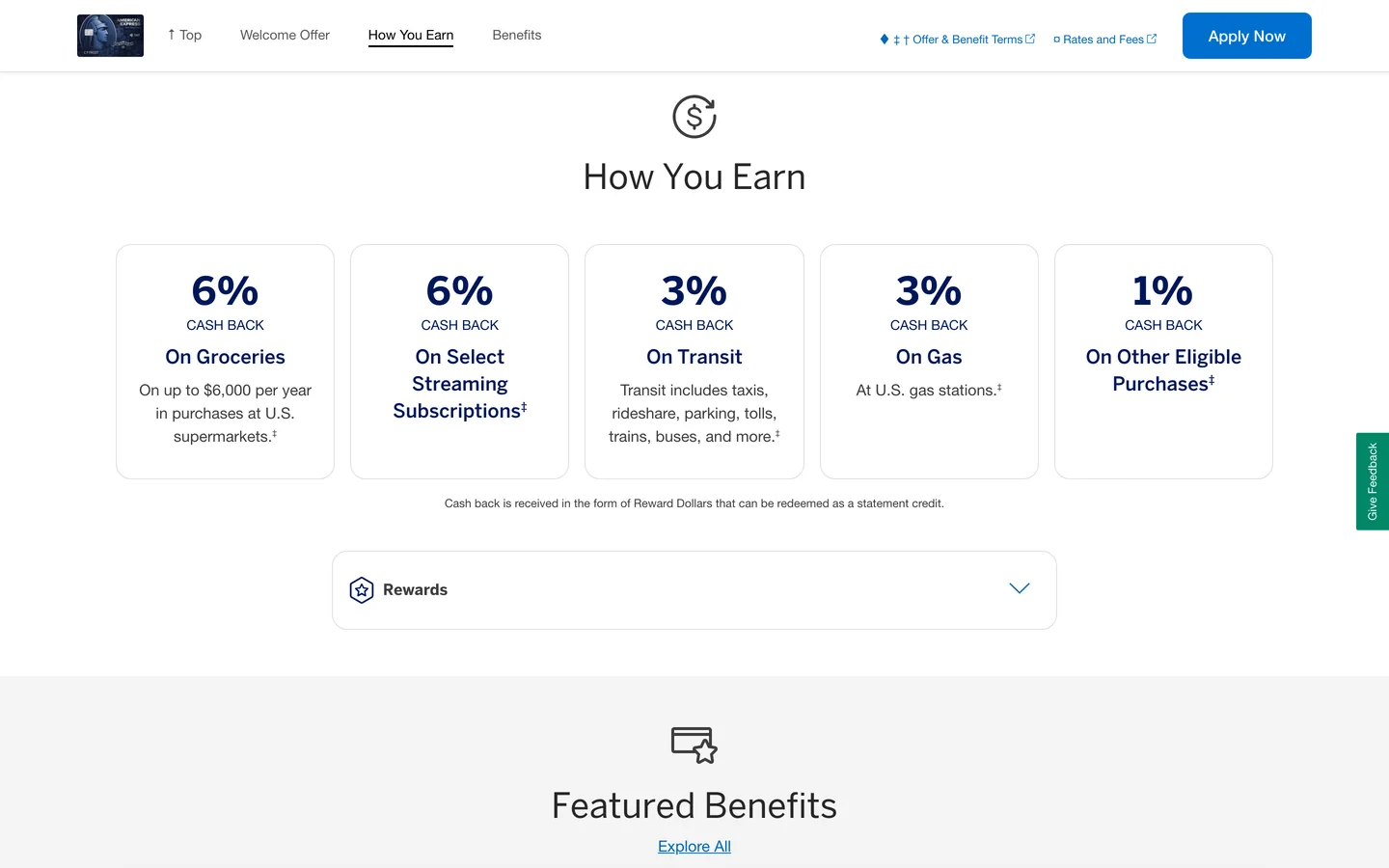
A statement credit reimburses you. The issuer posts money back against an eligible purchase — but it almost always requires enrollment, resets on a monthly or annual cycle (use it or lose it), and only counts when the streaming service is the merchant of record. A bonus category simply pays a higher rewards rate — 3x points, 6% cash back — when you charge the subscription. Nothing to enroll, nothing to forget, but nothing reimbursed either; you earn ordinary rewards, exactly as on any recurring charge.
A credit reimburses you and can be forgotten to $0. A bonus category just earns a higher rate — smaller, but you cannot forget to use it.
The practical rule that governs both: buy direct. As of July 2026, the reported terms generally require the provider to bill you. Subscribe through the Apple App Store or Google Play and the app store is often the merchant, so the credit or bonus rate may quietly fail to post. Put the card on file on the provider's own website.
Look up your service
Here is the service-first view. Rows are the streaming services people actually pay for; columns show which card credits or boosts each, whether it is a credit or a category, and whether enrollment is required. Amex entries are reported from secondary sources.
| Streaming service | Card(s) that credit or boost it | Credit or bonus category? | Enrollment? |
|---|---|---|---|
| Disney+ | Amex Platinum (digital entertainment); Blue Cash Preferred (Disney credit + 6%); Chase Sapphire Preferred (3x) | Credit (Platinum, Blue Cash) + category (6%, 3x) | Yes for the credits; no for the categories |
| Hulu | Amex Platinum (digital entertainment); Blue Cash Preferred (Disney credit + 6%); Chase Sapphire Preferred (3x) | Credit + category | Yes for the credits |
| ESPN+ | Blue Cash Preferred (Disney credit); Amex Platinum lists ESPN streaming | Credit | Yes |
| Netflix | Blue Cash Preferred (6%); Chase Sapphire Preferred (3x) | Bonus category only — no credit | No |
| YouTube TV | Amex Platinum (digital entertainment) | Credit | Yes |
| YouTube Premium | Amex Platinum (digital entertainment); Chase Sapphire Preferred (3x) | Credit + category | Yes for the credit |
| Paramount+ | Amex Platinum (digital entertainment) | Credit | Yes |
| Peacock | Amex Platinum (digital entertainment) | Credit | Yes |
Disney+, Hulu, and ESPN+
These three are the best-covered services in 2026. As reported, the Amex Platinum's Digital Entertainment Credit lists Disney+, the Disney Bundle, ESPN streaming, and Hulu among eligible purchases (up to $25/month, enrollment required, bought direct). Separately, the Blue Cash Preferred carries a Disney Streaming Credit of up to $10/month (up to $120/year) on Disney+, Hulu, or ESPN+ bought direct — also enrollment-required — and it stacks a 6% cash-back rate on select U.S. streaming that needs no enrollment. If Disney's bundle is your anchor, weigh Netflix vs Hulu and the wider field in the best streaming services in 2026 before you assign a card to it.
Netflix
This is the honest gap. As of July 2026, no card credits Netflix — it is not on the Amex Platinum digital entertainment list, and there is no reported standalone Netflix statement credit anywhere. What you can do is earn: the Blue Cash Preferred's 6% on select U.S. streaming and the Chase Sapphire Preferred's 3x points on streaming both include Netflix as a bonus category. That lowers the effective cost slightly; it does not reimburse the bill.
YouTube TV, YouTube Premium, Paramount+, and Peacock
As reported, all four appear on the Amex Platinum's eligible list, so each can be credited up to the shared $25/month ceiling when bought direct and enrolled. YouTube Premium additionally earns 3x on the Chase Sapphire Preferred as a bonus category. The ceiling is shared across the whole list, though — $25 a month total, not per service — so stacking several eligible subscriptions does not multiply the credit.
What the credits are actually worth
Two annual ceilings anchor the whole streaming-credit conversation. The value is real only if you would pay for those services anyway, buy them direct, and remember to enroll.
Read those ceilings in context. The Blue Cash Preferred's $120 sits on a card with a $0 fee the first year, then $95 — so the Disney credit alone can cover most of the ongoing fee. The Platinum's $300 sits on a card with an $895 annual fee (as reported), which reframes it entirely: the digital entertainment credit is one of several credits designed to offset a very large fee, not free money bolted onto a cheap card. The honest question on the Platinum is whether the full stack of credits you will genuinely use clears $895 — the same discipline we apply in the $550 travel-card annual-fee breakeven.
The Sapphire perks, and a brief Prime note
The Chase Sapphire cards reward streaming through points, plus a couple of complimentary perks rather than credits. As of July 2026, the Sapphire Preferred earns 3x on streaming and includes a complimentary year of Apple TV+ if activated by December 31, 2026; the Sapphire Reserve includes complimentary Apple TV+ and Apple Music if activated by June 22, 2027. Those are perks and bonus categories, not statement credits — do not budget them as reimbursements.
Two more mechanisms round out the picture. The U.S. Bank Cash+ lets you select a 5% "TV, Internet & Streaming" category, capped and activated each quarter (as reported). And the Citi Custom Cash — historically 5% on your top category, which could be streaming — is closed to new applicants as of May 28, 2026, so it matters only to existing holders. Finally, if Prime Video is part of your mix, the Prime Visa earns 5% back at Amazon including Prime Video purchases, but it requires an active Amazon Prime membership to reach that rate.
Who should chase a streaming credit?
Pros
- You already pay for a service on the eligible list — Disney+, Hulu, YouTube TV, Paramount+, Peacock — so the credit reimburses spending you would incur anyway.
- You are organized enough to enroll once and use the credit before it resets.
- You subscribe directly through providers rather than through app-store billing.
- You want a guaranteed, no-effort return and are happy with a bonus category (6% or 3x) instead of a credit you have to manage.
Cons
- Your anchor service is Netflix, which no card credits — you can only earn a higher rate.
- You would subscribe to a service only to "use up" a credit, which is spending to save less.
- You forget monthly benefits, so use-it-or-lose-it credits quietly become $0.
- You are drawn to a high-fee card for its streaming credit alone, without the rest of its stack clearing the fee.
Next, sanity-check the service itself before you attach a card to it — compare Netflix vs Hulu and scan the best streaming services in 2026 — then, for the full card-by-card view, read the companion inventory, cards that pay for your subscriptions.