
We independently score every service with our Experience Index. We may earn a commission if you subscribe through links on this page — it never affects our scores or picks.
For a decade the premium-card pitch was easy to reason about. A $550 fee bought lounge access and a $300 travel credit, so you were really paying about $250 for the perks, and most frequent travelers came out fine. That mental model is broken. Both flagship fees leapt in 2025, and issuers papered over the increase with a longer and longer list of statement credits — many of them narrow, merchant-specific, and quietly designed to expire unused. This guide gives you a single honest framework for deciding whether any premium fee pays for itself, and applies it to the cards that matter in 2026.
The $550 breakeven is dead
Start here, because it reframes everything. The number in this guide's own URL — $550 — no longer describes any flagship premium card.
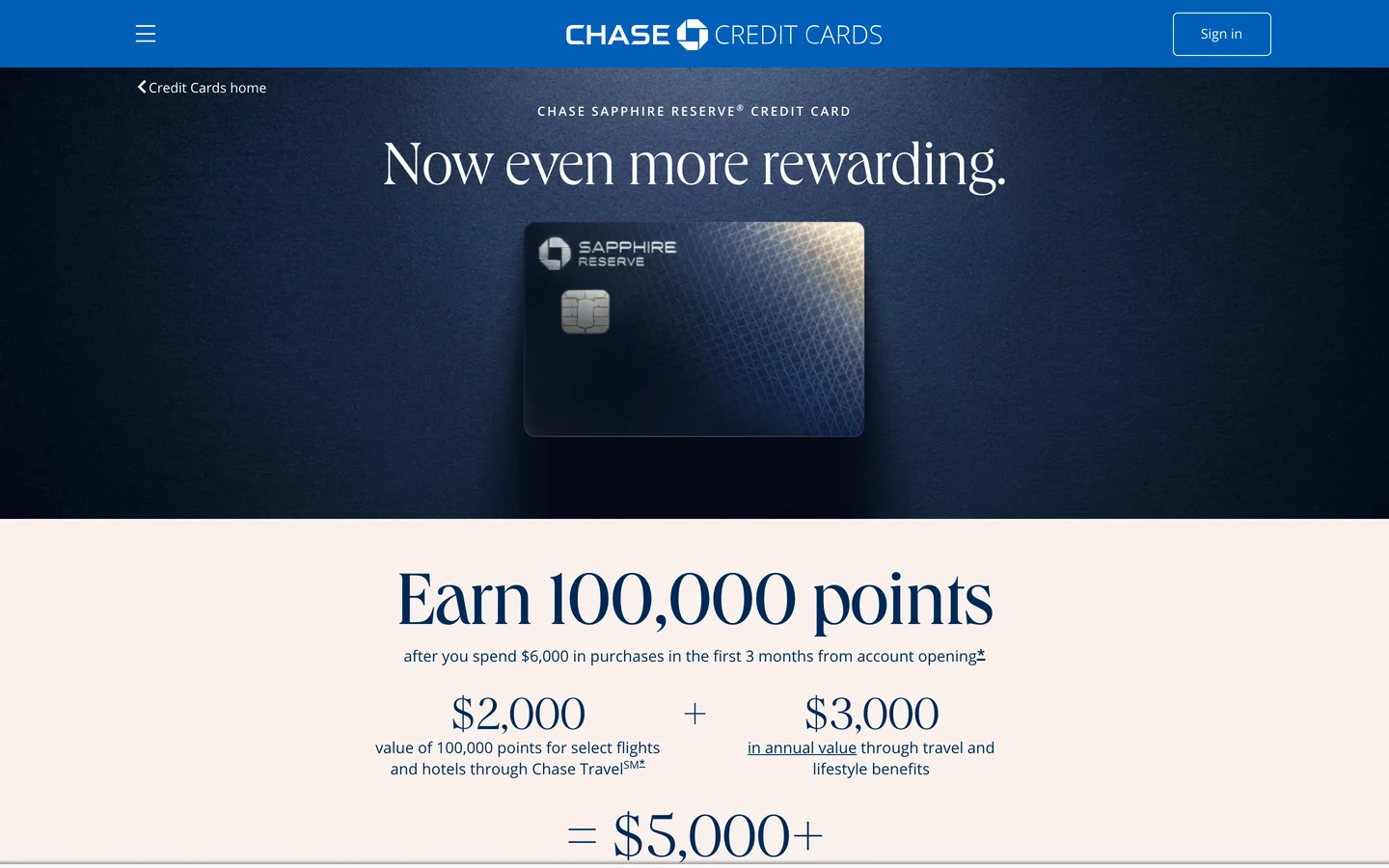
In 2025 the two anchor products of the premium market raised their fees sharply. As of July 2026, the Chase Sapphire Reserve carries a $795 annual fee, up from $550. The Platinum Card from American Express carries an $895 annual fee, up from $695, with the increase taking effect in September 2025. (Both figures are current terms as of July 2026 — confirm on the issuer's page before you rely on them.)
That is a $245 jump on the Reserve and a $200 jump on the Platinum in a single cycle. Neither issuer simply asked for more money; both stapled additional statement credits onto the card to justify the increase. And that is exactly where the honest analysis begins — because the value of those new credits is not the number on the marketing page.
The one number issuers want you to stare at
Open any premium card's page and you will see a big, cheerful tally: "up to" some four-figure sum in annual credits, printed larger than the fee. Treat that number as a ceiling, never as value you will receive.
The word doing the work is "up to." A credit worth "up to $300 a year" delivered as $25 a month, only at one merchant, only after you enroll, is worth $300 solely to the person who spends $25 at that merchant every single month and never forgets. Miss four months and it is a $150 credit. Never shop there and it is a $0 credit that still inflated the headline. Issuers assemble these totals knowing most cardholders will leave a meaningful slice on the table — that breakage is part of the business model.
So the first discipline is refusing to do the issuer's arithmetic. The headline total is the maximum a hyper-organized person could theoretically extract. Your number is different, and usually much lower.
The method: automatic value versus the coupon book
Here is the framework the rest of this guide runs on. Sort every credit a card offers into two buckets.
Bucket 1 — automatic or flexible credits (nearly cash). These post with little or no effort and apply to spending you would do anyway. The clearest examples are the flat travel credits: as of July 2026, the Chase Sapphire Reserve's $300 annual travel credit applies automatically to a wide range of travel purchases, and the Capital One Venture X's $300 annual Capital One Travel credit works the same way. The Amex Platinum's hotel credit (up to $600/yr, delivered as $300 semiannually and applied automatically on qualifying Fine Hotels + Resorts and Hotel Collection bookings) counts here too — but only if you already book those prepaid hotel stays. Automatic credits are close to cash because capturing them requires no behavior change.
Automatic credits are close to cash because capturing them requires no behavior change.
Bucket 2 — coupon-book credits (require a behavior change). These need enrollment, a specific merchant, and use-it-or-lose-it monthly or quarterly timing. As of July 2026 the list is long: the Reserve's dining, StubHub, Peloton, and Apple credits; the Platinum's Resy quarterly dining, digital-entertainment monthly, Uber Cash monthly, Saks semiannual, and Equinox credits; the Gold Card's Dunkin and monthly dining credits. Each is real value if — and only if — you were already going to spend at that exact merchant on that exact cadence. For everyone else it is a coupon that expires. Our inventory of cards that pay for your subscriptions breaks down exactly which of these credits are worth chasing.
Now the actual test:
Automatic credits + credits you'd have spent on anyway − the annual fee.
If that number is positive, the card pays for itself and you keep it. If it is negative — if the only way to reach breakeven is to fully exploit coupon-book credits you keep forgetting — the card does not pay for itself, and the right move is to downgrade to a cheaper card in the same family.
The cards, run through the framework
Chase Sapphire Reserve — $795
As of July 2026, the Reserve's most valuable credit is the $300 annual travel credit: automatic, flexible, and the easiest dollar on the card to capture. After that the value gets conditional fast. There is a new-for-2026 "The Edit" hotel credit worth up to $500/yr, but it requires prepaid bookings through Chase's hotel program plus enrollment; a dining credit up to $300/yr (enrollment, paid semiannually); a StubHub credit up to $300/yr (enrollment); a $10/month Lyft credit (automatic) plus DashPass, Peloton, and complimentary Apple TV+ and Apple Music (enrollment); and Global Entry or TSA PreCheck reimbursement up to $120 every four years. On paper the credits dwarf the fee. In practice, most of that total lives in Bucket 2, so the honest breakeven turns on whether you genuinely use "The Edit" hotels and the semiannual dining credit — not on the headline.
The Platinum Card from American Express — $895
The Platinum has the highest fee and the deepest coupon book. As of July 2026: a hotel credit up to $600/yr ($300 semiannual, automatic on qualifying Fine Hotels + Resorts and Hotel Collection bookings); Resy dining up to $400/yr ($100 per quarter, enrollment); digital entertainment up to $300/yr ($25/month, enrollment); Uber Cash up to $200/yr ($15/month, plus a $20 top-up in December); an airline fee credit up to $200/yr (you must select one airline in advance); CLEAR Plus up to $209/yr; a Saks credit up to $100/yr (enrollment); and an Equinox credit up to $300/yr (enrollment). The hotel credit is the closest thing to automatic value, and only if you book those hotels anyway. Equinox, Saks, and the quarterly Resy credit are textbook coupon-book: real for a specific lifestyle, near-zero for everyone else.
American Express Gold Card — $325
The Gold is not a lounge card; it is a dining-and-groceries earner with a smaller coupon book. As of July 2026 its credits are a dining credit up to $120/yr ($10/month, enrollment), Uber Cash up to $120/yr, a Resy credit up to $100/yr, a Dunkin credit up to $84/yr, and a $100 Hotel Collection credit per booking. Every one of these is Bucket 2 — monthly, merchant-specific, enrollment-gated — so the Gold pays for itself mainly through the points it earns on food spending, not through the credits.
Capital One Venture X — $395
This is the premium card that is easiest to break even on, and it is not close. As of July 2026, the Venture X pairs a $300 annual Capital One Travel credit (automatic) with a 10,000-mile anniversary bonus (reported at roughly $100 in value — present that as an industry-reported figure, not an issuer-confirmed cash amount). Those two together offset most of the $395 fee with almost no effort, and you still get Priority Pass and Capital One Lounge access plus Global Entry reimbursement up to $120. Because the offsetting value is overwhelmingly Bucket 1, the Venture X clears the breakeven test for far more people than the $795–$895 cards do.
| Card | Annual fee | Most valuable AUTOMATIC credit | Headline credit ceiling |
|---|---|---|---|
| Chase Sapphire Reserve | $795 | $300 annual travel credit (automatic) | Well over the fee, but mostly coupon-book |
| The Platinum Card from Amex | $895 | Up to $600/yr hotel credit (auto on qualifying bookings) | Very high, deepest coupon book |
| American Express Gold Card | $325 | None truly automatic; credits are monthly/merchant-specific | Up to ~$424/yr, all enrollment-gated |
| Capital One Venture X | $395 | $300 annual travel credit (automatic) | ~$300 + reported ~$100 anniversary miles |
| Chase Sapphire Preferred | $95 | No premium credit stack — low fee to clear | Minimal by design |
| Citi Strata Premier | $95 | No premium credit stack — low fee to clear | Minimal by design |
If the premium math doesn't work, go mid-tier
The framework has an escape hatch, and it is the honest recommendation for a lot of people. If a premium card only pays for itself when you fully exploit credits you keep forgetting, you do not have to choose between an $895 fee and no card at all.
As of July 2026, the Chase Sapphire Preferred and the Citi Strata Premier both carry $95 annual fees. Neither drowns you in coupon-book credits, which means there is almost nothing you need to remember to use to justify keeping them. For someone who travels a few times a year but will not reliably trigger a monthly Uber credit or a quarterly Resy credit, a $95 card is usually the smarter, lower-stress buy than a flagship whose value you would leave on the table. The same lower-stress logic applies beyond cards: a $49/year flight-deal alert attacks the fare itself rather than the fee math — our Going Premium review runs that trade honestly.
Frequently asked questions
Does a premium travel card's annual fee pay for itself in 2026?
Why did premium card annual fees go up so much?
Which premium card is easiest to break even on?
What counts as an automatic credit versus a coupon-book credit?
Is a lower-fee card a better deal than a premium one?
New to all of this? Start with the beginner's guide to travel points to get the basics down, then learn the best ways to redeem Chase points so the points you earn on these cards actually go further. And because so much of a premium fee is really a bundle of statement credits, our breakdown of cards that pay for your subscriptions is the natural next read — it inventories exactly which of those coupon-book credits are worth chasing and which are padding.