We independently score every service with our Experience Index. We may earn a commission if you subscribe through links on this page — it never affects our scores or picks.
The pitch for a free VPN writes itself: the same public-Wi-Fi protection a paid service sells, minus the bill. The problem is that a VPN routes all your traffic through the provider's servers, so it sees everything your ISP used to. That is a lot of trust to hand a company you are not paying — and the research on who actually deserves that trust is not encouraging. This guide walks through what investigators have found, what a government cybersecurity agency has warned, and the single exception that holds up.
The economics: why "free" is the warning sign
Start with the money, because it explains everything else. Operating a VPN means renting servers, moving large volumes of encrypted traffic, and maintaining apps across platforms — none of it cheap. A provider that charges you nothing still has those bills, so the question is always who pays? When the answer is not "the subscriber," it is usually "the advertiser or data broker who buys access to what the app sees." That is the opposite of what a VPN is for.
This is not cynicism; it is the documented pattern. A free VPN with no paid product behind it has a structural incentive to treat your browsing as inventory. The exceptions are the free tiers that exist as a funnel for a paid service — where the company already makes money elsewhere and the free plan is marketing, not the revenue model. Holding that distinction in mind is the single most useful filter you can apply.
What the investigations found
The clearest evidence comes from Top10VPN's investigation of 100 of the top free Android VPN apps. The findings are not subtle. As documented in that investigation, 71 of the 100 apps shared personal data with third parties such as data brokers and analytics firms, and 61 shared the Google Advertising ID — the persistent identifier that lets an ad network stitch your activity together across apps. On top of that, 19% were flagged as malware by antivirus scanners, and 36% used weaker-than-standard encryption, meaning the "protection" was thinner than a VPN implies.
Those numbers describe the apps' behavior, not their marketing, which uniformly promises privacy. And leakage compounds the problem: separate from data-sharing, many free VPNs leak IP or DNS data — quietly exposing the very identifiers the tunnel is supposed to hide. When a "privacy" app both ships weak crypto and phones your identifiers home, you are arguably worse off than with no VPN at all, because you have added a party to the chain while believing you removed the risk.
A VPN that ships weak encryption and shares your advertising ID has not protected your privacy — it has added a middleman to it.
What a government agency actually warned
It is not only privacy researchers raising a flag. US CISA's December 2024 mobile-communications guidance cautioned that personal VPNs "shift residual risks from your ISP to the VPN provider, often increasing the attack surface," and noted that many providers have questionable security and privacy policies. The logic mirrors the economics above: a VPN does not delete risk, it relocates it — from an ISP you have some relationship with to a provider you may know nothing about.
One important caveat keeps this honest. That CISA guidance was written for highly-targeted individuals — senior government officials facing sophisticated adversaries — not for the average person shielding a laptop at a coffee shop. It would be an overreach to claim CISA told everyone to avoid VPNs. The transferable lesson is narrower and still worth taking: who you hand your traffic to is the entire question, and an unknown free provider is the weakest possible answer to it.
The exception that holds up
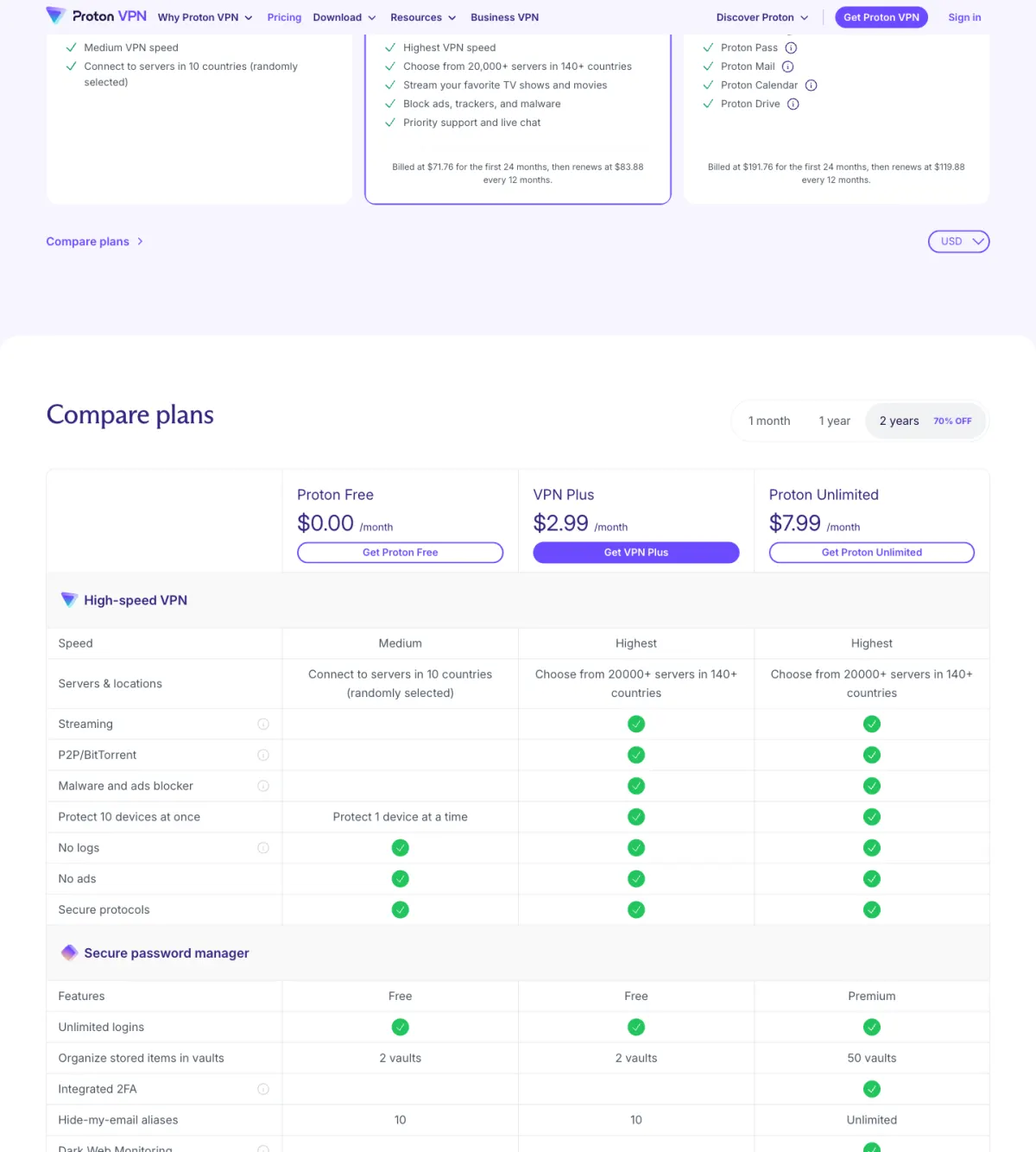
There is one category that survives all of this: a free tier funded by a company's paying customers rather than by your data. As of July 2026, Proton VPN Free is the clearest example. It offers unlimited data with no ads and no logging or data-selling, because Proton pays for it out of its paid subscriptions. Proton is Swiss-based, its apps are open-source, and it is independently audited, having passed another no-logs audit in 2026 — so the promise is externally checked rather than taken on faith.
Its limits are real, but they are limits by design, not privacy compromises: one device at a time, servers in about ten countries chosen at random, and no streaming. Speed is the one worth reading closely rather than assuming: Proton markets the free plan as having no speed limits and unlimited bandwidth, while its own plan comparison rates free-tier speed “Medium” against “Highest” on the paid tiers (both checked on protonvpn.com, August 20, 2026). So there is no data cap throttling you — but do not expect VPN Plus throughput either. Those constraints are how Proton nudges heavier users toward paying, and they are honest about it. For occasional protection on a single device, that is a genuinely safe $0 option — the rare one.
One trap to avoid
Do not let a reputable paid brand's free trial get filed under "free VPN." A trial is a time-limited sample of a paid product, governed by that paid provider's privacy policy, and it typically ends by asking for your card. That is a completely different thing from the standalone free app with no paid business behind it — which is exactly where the data-harvesting evidence clusters. When you evaluate a "free VPN," ask first whether a paying customer base funds it. If the answer is no, the research says walk away.
Who should trust a free VPN, and who shouldn't
Pros
- Proton VPN Free is safe for light, occasional use on one device: unlimited data, no ads, no logging, and independently audited.
- A free tier that funnels toward a paid product has a business reason not to sell your data — that alignment is what makes it trustworthy.
- For public-Wi-Fi protection on a single laptop or phone now and then, a funded free tier costs nothing and gives up no privacy.
Cons
- Standalone free VPN apps from unknown providers are the documented risk: most in the Top10VPN investigation shared personal data, and some shipped malware or weak encryption.
- Free tiers cap you hard — one device, about ten countries, throttled speed, no streaming — so anything heavier will pinch.
- "Free" plus "no paid product behind it" is the pattern to avoid; the app's marketing will still promise total privacy.
If Proton's free tier is on your shortlist, the natural next question is whether its limits will pinch you — we work through exactly that in is Proton VPN Free enough, or is Plus worth it?. To judge whether the paid product earns its place at all, start with is Proton VPN worth it?, and to see how the affordable paid field compares, read the best cheap VPN.